Why card payment matters so much for a coffeeshop
Paying by card has become the norm at the Dutch counter, and the coffeeshop is no exception: the great majority of customers simply want to tap. But there is a second reason that weighs heavier here than almost anywhere: safety and admin. Every card payment is money not sitting in the till drawer. Less cash on the premises means less risk, less counting, and books that add up on their own. For a sector that traditionally handled a lot of cash, the terminal is more than convenience; it is peace of mind.
Every card payment is money not sitting in the till drawer.
How it works at the counter
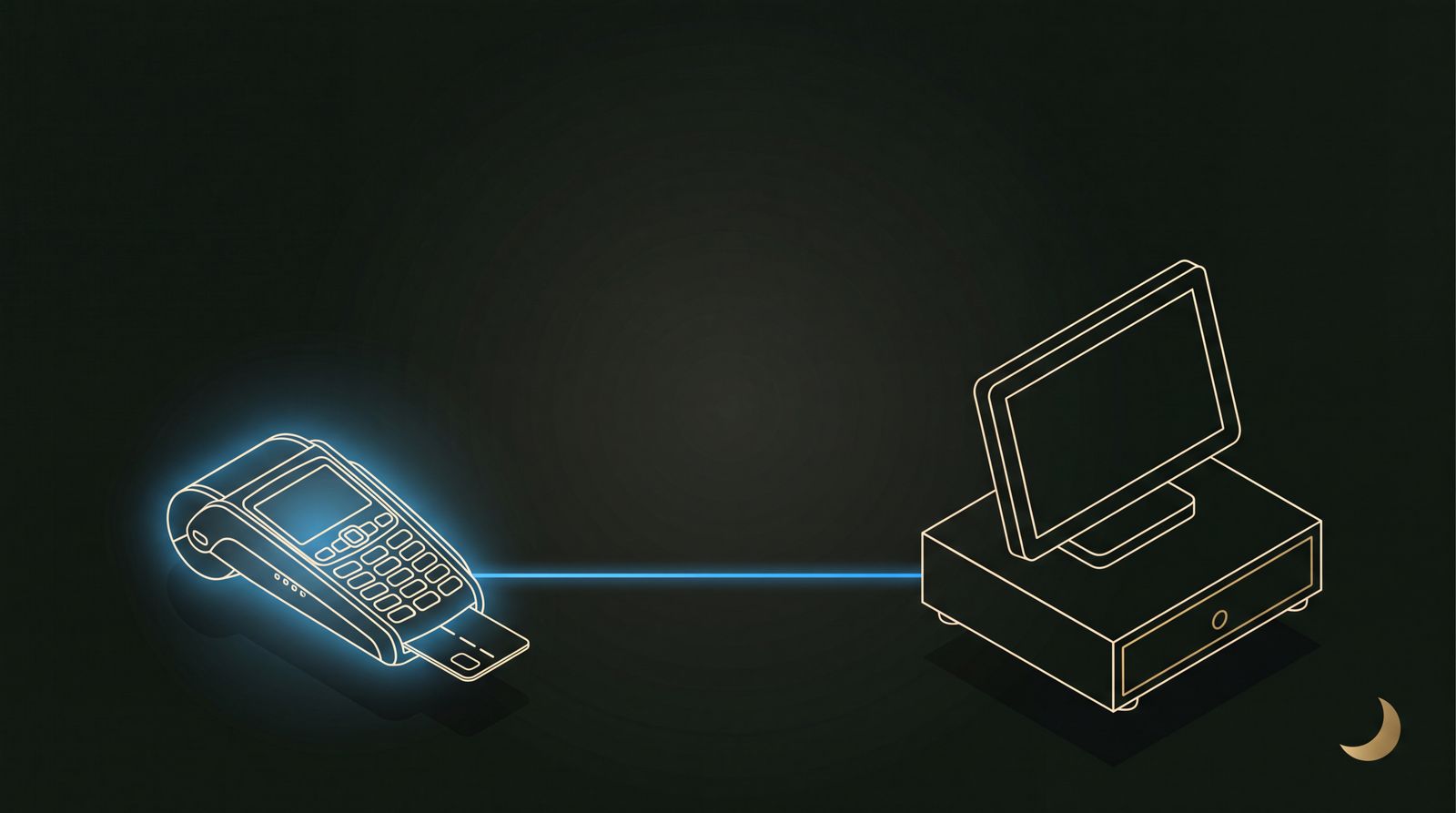
The setup is straightforward. Your terminal accepts contactless, chip and PIN, and phone payments. Through a POS integration the terminal talks directly to your till: your staff ring up the amount, it appears on the terminal, and the status comes back automatically. Nobody double-types, so no errors and no discrepancies at close. Revenue is then settled to your business account, depending on your package in some cases the next business day. And in your dashboard you follow it all live.
The real hurdle: access, not technology
Here is where it pinches for the sector. Mainstream banks generally do not offer the card service to coffeeshops directly, and many payment providers refuse the sector or leave it after a while. How vulnerable that makes you became clear when a large payment provider terminated dozens of coffeeshops' card contracts collectively late last year. A Netherlands court struck that termination down earlier this year: excluding a whole sector categorically, without individual assessment, is not allowed. An important ruling, and a lesson at once, because the shops involved spent months uncertain about something as basic as taking card payments. The full story is in our article on the Worldline case.
How to arrange it for the future
Set up your acceptance so you are not tied to one party in the chain: a specialist that knows and accepts the sector, licensed European acquirers behind your terminal, and a provider that works with multiple acquirers. Together you decide whether a second one stands ready as a backup from the start, and if an acquirer stops serving coffeeshops, your provider moves you to another. That way a termination does not send you back to square one.