First: what is an acquirer?
An acquirer is the party that processes your card transaction and settles the money to your account. No acquirer, no card acceptance: it is the indispensable link between your customer's payment and the money in your account. Most providers work with one acquirer. As long as all goes well, you notice nothing. The trouble starts when it does not.
Three moments where one acquirer costs you
- The Friday-night outage. Your place is full, the terminal will not work, and the cause is not you but somewhere in the chain. With one acquirer there is no alternative: you wait, and your customers wait with you, or walk out.
- The sector refusal. Acquirers adjust their policy, and sometimes one decides your sector no longer fits. With one acquirer your entire acceptance stops at that moment, however clean your own figures.
- The termination. The letter every high-risk business dreads. With one acquirer a race against the clock begins to find a new home, while your revenue sits idle.
In all three, the underlying problem is the same: your whole revenue hangs on one party. Multi-acquiring makes you less dependent on that one party.
For high-risk businesses, that is the difference between starting over and carrying on.
How it works
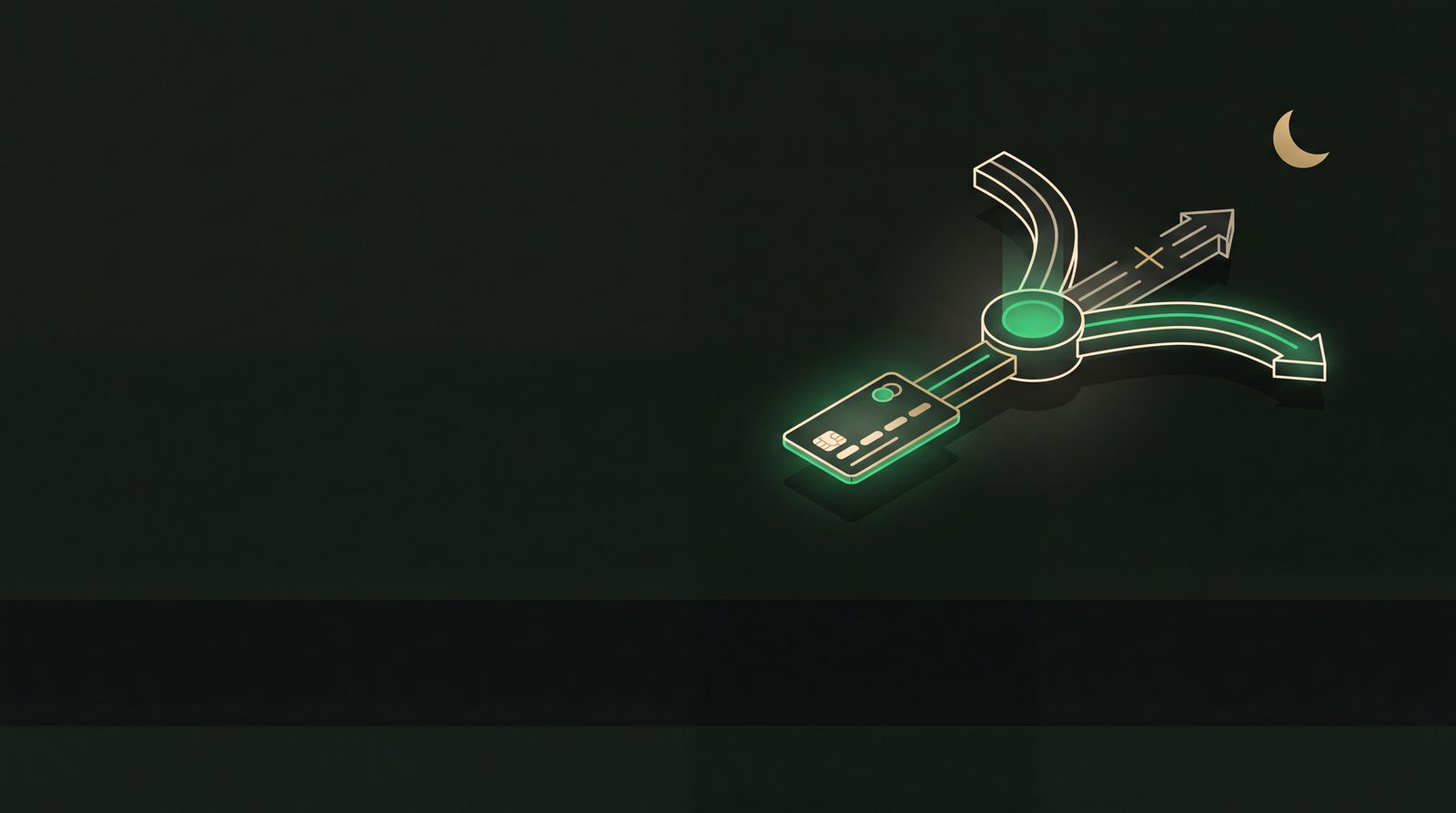
With multi-acquiring your payment provider, the connecting layer between you and the acquirers, works with multiple licensed acquirers. Your transaction goes through that provider to the acquirer you are signed up with. If a second acquirer stands ready as a backup, there is a second route when the first one is not available. That switch is called failover. Whether that second acquirer joins from the start, you decide together with your provider, based on the risk in your sector. And if an acquirer stops serving your sector, your provider moves you to another, so you do not have to start searching again. In the industry this is also called payment orchestration or dynamic transaction routing. There is a second benefit, often forgotten: different acquirers accept different transactions. With a second acquirer alongside, your acceptance rate can go up, even on days when nothing is broken. A decline by your customer's bank, for instance for insufficient funds, is not something another acquirer solves.
The smart operator already did this
The idea is not new; experienced high-risk businesses already apply it. Serious dropshippers, for example, run several processors side by side of their own accord. If one drops their account, another keeps the orders flowing. Multi-acquiring brings that principle under one roof, so you do not have to rig it up with separate contracts and separate integrations. One connection, multiple licensed acquirers behind it.
For whom this makes the difference
For an ordinary shop, one acquirer is usually fine. For high-risk businesses it is not, because the chance of a refusal or termination is real, and the consequences are immediate: no payments means no revenue. Whether you run an online casino where a player who cannot deposit does not return, a shop where the queue at the counter cannot wait, or a webshop in peak season: continuity is not a luxury, it is the core of your payment solution.